
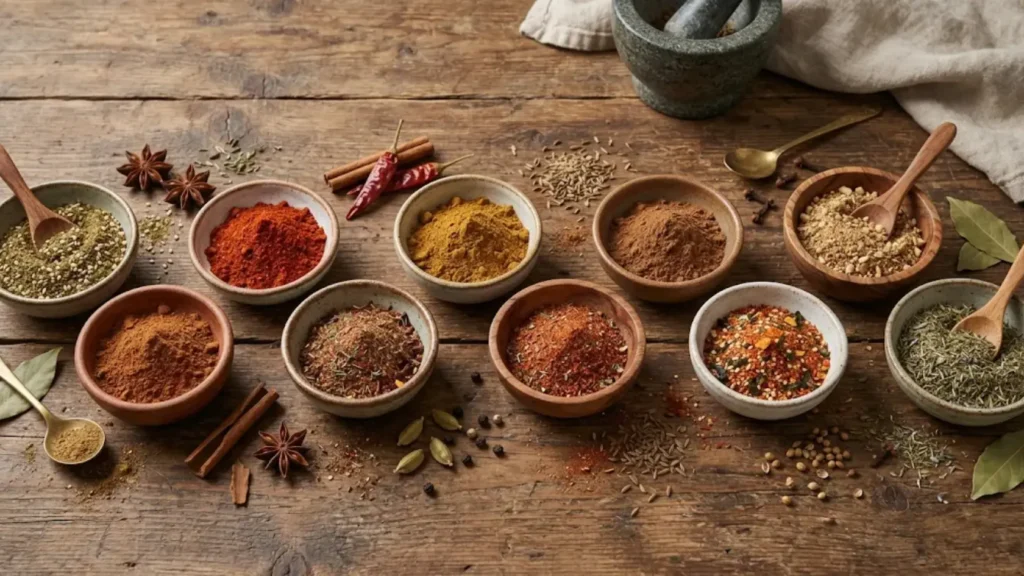
10 Global Seasoning Blends to Try First
The 10 best global seasoning blends to try at home are garam masala (India), za’atar (Middle East), ras el hanout (Morocco), herbes de Provence (France), Chinese five-spice (China), Cajun seasoning (USA), peri peri (Portugal and Mozambique), shichimi togarashi (Japan), berbere (Ethiopia) and Jamaican jerk (Caribbean). Each blend packs a whole cuisine’s flavor into one jar, so a single spoonful can turn plain chicken, rice, vegetables or snacks into a regional dish.
A seasoning blend saves you from buying ten separate spices and guessing the ratios. Below, you will find what each blend tastes like, what goes into it, how hot it is, and the easiest way to use it in a home kitchen. At BioMasdar, we build flavor for snacks and kitchens every day, and this guide shares what we have learned about balancing heat, aroma, salt and acidity.
What Is a Seasoning Blend?
A seasoning blend is a pre-mixed combination of dried spices, herbs, salt and sometimes acids or sugar, made to deliver a complete flavor profile in one step. Single spices add one note; a blend adds a balanced chord of heat, aroma, savoriness and tang.
Seasoning blends fall into three practical types:
- Cooking blends go into a dish while it cooks, such as garam masala in curries or five-spice in braises.
- Finishing blends are sprinkled on at the end, such as za’atar on bread or shichimi togarashi on noodles.
- Snack seasonings are fine, free-flowing powders made to stick to chips, popcorn, nuts and fries, such as peri peri or cheese jalapeno.
Top 10 Global Seasoning Blends to Try at Home
1. Garam Masala (India and Pakistan)
Garam masala is a warm, aromatic blend that defines South Asian cooking. “Garam” means warm, which describes its spice warmth rather than chili heat.
- Typical ingredients: cumin, coriander, green and black cardamom, cinnamon, cloves, black pepper, nutmeg or mace.
- Flavor: earthy, sweet-warm, fragrant. Heat: mild.
- How to use at home: stir half a teaspoon into curry, daal or karahi in the last few minutes of cooking so the aroma stays fresh.
- Try it with: butter chicken, chickpea curry, roasted cauliflower.
2. Za’atar (Levant and Middle East)
Za’atar is a tangy herb-and-seed blend eaten across Lebanon, Syria, Palestine and Jordan, most famously on flatbread.
- Typical ingredients: dried wild thyme or oregano, sumac, toasted sesame seeds, salt.
- Flavor: herby, lemony from sumac, nutty. Heat: none.
- How to use at home: mix with olive oil and spread on naan or pita before baking, or sprinkle over hummus, eggs and yogurt.
3. Ras El Hanout (Morocco)
Ras el hanout means “head of the shop”, the spice merchant’s best house blend. Recipes vary widely and can include more than 20 spices.
- Typical ingredients: cumin, coriander, ginger, turmeric, cinnamon, cardamom, allspice, black pepper, sometimes dried rose petals.
- Flavor: complex, floral, warm. Heat: mild.
- How to use at home: rub on lamb or chicken before roasting, or add a teaspoon to tagines, couscous and lentil soup.
4. Herbes De Provence (France)
Herbes de Provence is a dried herb mix from southern France, built for grilling and roasting.
- Typical ingredients: thyme, rosemary, savory, marjoram, oregano; many modern versions add lavender.
- Flavor: savory, piney, floral. Heat: none.
- How to use at home: rub onto chicken or fish with oil and garlic, or toss with potatoes and vegetables before roasting.
5. Chinese Five-Spice (China)
Chinese five-spice is built to balance the five tastes in one powder, with a sweet licorice edge from star anise.
- Typical ingredients: star anise, cloves, Chinese cinnamon (cassia), Sichuan pepper, fennel seeds.
- Flavor: sweet, warm, slightly numbing. Heat: mild.
- How to use at home: use a small pinch in stir-fries, marinades for duck or chicken, and fried rice. A little goes a long way.
6. Cajun Seasoning (Louisiana, USA)
Cajun seasoning comes from the rustic cooking of Louisiana’s French-descended Acadian communities.
- Typical ingredients: paprika, cayenne, garlic powder, onion powder, black and white pepper, thyme, oregano, salt.
- Flavor: smoky, savory, peppery. Heat: medium to hot.
- How to use at home: coat fish or chicken for pan-searing, season fries and wedges, or stir into rice and beans.
7. Peri Peri (Portugal and Mozambique)
Peri peri, also spelled piri piri, grew out of Portuguese and Mozambican cooking around the African bird’s eye chili. It is now one of the world’s most popular grilled-chicken flavors.
- Typical ingredients: African bird’s eye chili, paprika, garlic, onion, lemon or citrus, oregano, salt.
- Flavor: hot, garlicky, tangy. Heat: medium to hot.
- How to use at home: rub on chicken wings or thighs before grilling, toss on fries, or dust over popcorn and potato chips.
8. Shichimi Togarashi (Japan)
Shichimi togarashi means “seven-flavor chili” and is a common table condiment in Japan.
- Typical ingredients: red chili, sansho pepper, dried orange peel, black and white sesame, ginger, nori or hemp seed.
- Flavor: citrusy, spicy, toasty. Heat: medium.
- How to use at home: sprinkle over ramen, udon, rice bowls, grilled meat and edamame just before serving.
9. Berbere (Ethiopia)
Berbere is the deep red backbone of Ethiopian and Eritrean stews such as doro wat.
- Typical ingredients: dried red chili, paprika, fenugreek, ginger, garlic, korarima or cardamom, cloves, coriander, black pepper.
- Flavor: bold, earthy, slightly sweet. Heat: hot.
- How to use at home: cook with onions and oil as a base for lentil or chicken stews, or rub on grilled meat.
10. Jamaican Jerk (Caribbean)
Jerk seasoning is the signature of Jamaican grilled meat, especially jerk chicken.
- Typical ingredients: allspice (pimento), Scotch bonnet chili, thyme, garlic, scallion, cinnamon, nutmeg, brown sugar.
- Flavor: sweet, smoky, fiery. Heat: hot.
- How to use at home: marinate chicken for at least 4 hours, then grill or bake. It also works on grilled corn and roasted sweet potatoes.
Global Seasoning Blends Compared
| Blend | Origin | Key flavor | Heat level | Best for | Added when |
| Garam masala | India, Pakistan | Warm, aromatic | Mild | Curries, daal, karahi | End of cooking |
| Za’atar | Levant | Herby, tangy | None | Flatbread, hummus, eggs | Finishing |
| Ras el hanout | Morocco | Floral, complex | Mild | Tagines, roast meat | During cooking |
| Herbes de Provence | France | Savory, piney | None | Roast chicken, vegetables | Before roasting |
| Chinese five-spice | China | Sweet, anise | Mild | Stir-fry, duck, marinades | During cooking |
| Cajun | USA | Smoky, peppery | Medium–hot | Fish, fries, rice | Before cooking |
| Peri peri | Portugal, Mozambique | Hot, garlicky, citrus | Medium–hot | Grilled chicken, fries, chips | Before or after cooking |
| Shichimi togarashi | Japan | Citrus, chili, sesame | Medium | Noodles, rice bowls | Finishing |
| Berbere | Ethiopia | Earthy, bold | Hot | Stews, lentils | Start of cooking |
| Jamaican jerk | Caribbean | Sweet, smoky, fiery | Hot | Grilled chicken, corn | Marinade |
Mildest to try first: za’atar and herbes de Provence. Hottest: berbere and jerk. Best for snacks: peri peri, Cajun and shichimi togarashi.
How to Use Seasoning Blends at Home
The simplest rule: use about 1 teaspoon of blend per 500 g of meat or vegetables, taste, then adjust. Most mistakes come from adding blends at the wrong time, not using the wrong amount.
- Bloom cooking blends in oil. Heat garam masala, ras el hanout or berbere in oil for 30 seconds to release their aromatic oils.
- Add finishing blends last. Za’atar and shichimi togarashi lose their fresh, toasty notes when cooked too long.
- Season dry snacks while warm. Toss fries, popcorn or chips right after cooking so the powder sticks to the surface oil.
- Check the salt first. Many blends already contain salt, so reduce added salt until you taste.
- Marinate for depth. For jerk, peri peri and Cajun, mix the blend with oil and lemon and rest the meat for 2 to 12 hours.
How to Store Seasoning Blends
Store seasoning blends in an airtight container away from heat, light and moisture, such as a closed cupboard away from the stove. Ground blends keep their best aroma for roughly 6 to 12 months. Always use a dry spoon, because moisture causes clumping and dulls flavor.
What to Look for When Buying Seasoning Blends
- A clear ingredient list with recognizable spices near the top.
- Consistent color and aroma from batch to batch.
- Fine, even particle size if you want it to coat snacks evenly.
- Food safety credentials such as clean processing and proper packaging.
- The right heat level for your family, from mild to hot.
Bring Global Flavors Home with BioMasdar Seasonings
If you want global taste without mixing ten spices, ready-made seasonings are the fastest route. BioMasdar’s seasoning range takes flavors from the world’s favorite cuisines and turns them into fine, ready-to-use powders for snacks, fries, popcorn, grilled meat and home cooking.
| BioMasdar seasoning | Global flavor link | Try it on |
| Peri Peri Seasoning | Portuguese and Mozambican peri peri | Wings, fries, potato chips |
| Butter Chicken Seasoning | Classic South Asian butter chicken | Chicken, paneer, popcorn |
| Habanero Flavor Seasoning | Caribbean and Mexican chili heat | Nachos, wings, roasted nuts |
| Hot and Spicy Seasoning | Bold chili blends like Cajun | Chips, fries, grilled corn |
| Cheese Jalapeno Seasoning | Tex-Mex nacho flavors | Nachos, popcorn, chips |
| Lime Jalapeno Seasoning | Mexican chili and lime | Corn chips, fruit chaat, fries |
| Tomato Jalapeno Seasoning | Mexican salsa flavors | Chips, wedges, pasta |
| Lemon Chilli Seasoning | South Asian street snacks | Makhana, peanuts, chips |
| Lime Tomato Seasoning | Tangy tomato-citrus snacks | Potato chips, puffs, salads |
| Butter Cheese Seasoning | Comfort-style cheese flavors | Popcorn, fries, pasta |
Tip: For a quick global snack night, toss warm fries in three bowls with Peri Peri, Cheese Jalapeno and Lemon Chilli Seasoning, and let everyone pick a favorite.
Need Some Clarity?
Q1. What is the most popular seasoning blend in the world?
Garam masala, peri peri and Cajun seasoning are among the most widely used blends worldwide. Garam masala is a staple in South Asian homes, while peri peri has become a global favorite through grilled chicken and snacks.
Q2. What is the difference between a spice and a seasoning blend?
A spice is a single dried plant part, such as cumin seed or cinnamon bark. A seasoning blend combines several spices, herbs, salt and sometimes acids to create a complete, balanced flavor in one step.
Q3. Which seasoning blend is best for beginners?
Za’atar and herbes de Provence are the easiest to start with because they have no chili heat. Garam masala is a good next step for anyone who enjoys curries.
Q4. What does peri peri seasoning taste like?
Peri peri tastes hot, garlicky and tangy. The African bird’s eye chili brings heat, while lemon, garlic and paprika add sharpness and color.
Q5. Can I use seasoning blends on snacks like chips and popcorn?
Yes. Fine-ground seasonings work best on snacks. Toss chips, popcorn or fries while they are still warm so the powder sticks evenly.
Q6. How long do seasoning blends last?
Ground seasoning blends keep their best flavor for about 6 to 12 months when stored airtight, away from heat, light and moisture. They are usually still safe after that but taste weaker.
Q7. Are seasoning blends healthy?
Seasoning blends can make food tastier with less oil and sugar. Check the label for sodium, since many blends contain salt, and choose products with a clear ingredient list.
Q8. Which seasoning blend is the spiciest?
Berbere and Jamaican jerk are usually the hottest blends in this list. Habanero-based seasonings are also very hot because the habanero is one of the hottest common chilies.
Q9. How much seasoning blend should I use?
Start with about 1 teaspoon per 500 g of meat or vegetables, then taste and adjust. For snacks, a light, even dusting is enough.
Beyond the Basics
Global seasoning blends are the easiest way to cook like you have traveled the world. Start mild with za’atar or herbes de Provence, move to warm garam masala and ras el hanout, then work up to peri peri, berbere and jerk. Learn when to add each blend, store it airtight, and keep a few favorites ready for both meals and snacks.
Ready to Bring Global Flavors Home?
Explore BioMasdar’s full seasoning range, from Peri Peri and Butter Chicken to Cheese Jalapeno and Lemon Chilli, and turn everyday chips, fries and grills into global flavor experiences. Shop BioMasdar Seasonings → For bulk or snack-manufacturing needs, contact the BioMasdar team for samples and pricing.