
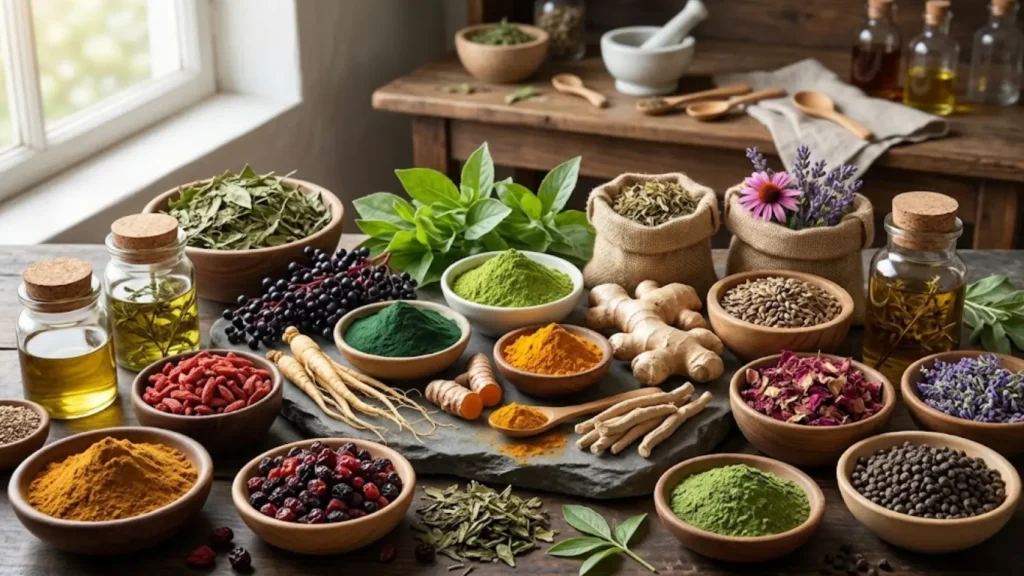
Natural ingredients for nutraceutical and supplement manufacturers are plant-derived raw materials, such as oleoresins, essential oils, cold pressed oils, dehydrated fruit, vegetable and spice powders, and natural seasonings, used to deliver active compounds, flavour, colour and nutrition in capsules, tablets, powders, gummies and functional foods. The best ones are standardised to a defined marker compound, backed by a Certificate of Analysis, and traceable to their farm or region of origin.
Demand for clean label supplements has made ingredient sourcing one of the biggest decisions a formulator makes. The raw material decides potency, taste, shelf life, regulatory approval and, ultimately, whether a customer reorders.
This guide is written for R&D heads, procurement managers and brand owners. It covers:
- What counts as a natural nutraceutical ingredient, and how it differs from a synthetic one
- The main ingredient categories and where each fits in a formulation
- A step-by-step checklist for choosing a reliable natural ingredient supplier
- Dosage-form guidance for capsules, tablets, powders, gummies and liquids
- Regulatory basics across India, the US and the EU
- Trends shaping natural supplement ingredients
It draws on the working experience of the BioMasdar team, which supplies natural ingredients to food, nutraceutical and supplement manufacturers.
What Are Natural Ingredients for Nutraceuticals?
A natural nutraceutical ingredient is a raw material obtained from plants, fruits, vegetables, seeds or spices through physical or solvent-based processing, without chemical synthesis of the active compound. Examples include turmeric oleoresin (source of curcumin), black pepper oleoresin (piperine), ginger oleoresin (gingerols), peppermint essential oil and cold pressed flaxseed oil (alpha-linolenic acid).
Nutraceuticals vs. Dietary Supplements: What Is the Difference?
A nutraceutical is any food or food-derived product that offers a health benefit beyond basic nutrition. A dietary supplement is a regulated product format, such as a capsule, tablet, powder or gummy, taken to add nutrients or bioactive compounds to the diet. Most supplements are nutraceuticals, but not every nutraceutical is a supplement; functional foods and beverages also qualify.
Natural vs. Synthetic Ingredients
| Factor | Natural ingredient | Synthetic ingredient |
| Source | Plants, spices, fruits, seeds | Chemical synthesis |
| Composition | Active compound plus co-occurring phytochemicals | Single isolated molecule |
| Label claim | Supports “natural”, “plant-based” and clean label positioning | Usually cannot be called natural |
| Batch consistency | Varies with crop and season; managed by standardisation | Highly uniform |
| Cost | Often higher; depends on harvest | Often lower at scale |
| Consumer preference | Strong and growing | Declining in many categories |
The trade-off is consistency. Natural ingredients vary with soil, climate and harvest, so serious suppliers standardise them to a guaranteed level of a marker compound and prove it on every batch.
8 Types of Natural Ingredients Supplement Manufacturers Use
The eight categories below cover most natural raw materials used in supplements and functional foods. Each maps to a product line in the BioMasdar range.
| Category | What it is | Typical uses | Common examples |
| Oleoresins | Concentrated solvent extracts holding a spice’s oil and resin | Capsules, softgels, tablets, beverages | Turmeric, black pepper, ginger, capsicum, rosemary |
| Essential oils | Volatile aromatic oils from steam distillation or cold expression | Digestive and respiratory blends, flavouring, softgels | Peppermint, clove, cinnamon, lemon, eucalyptus |
| Cold pressed oils | Oils pressed mechanically without high heat | Omega-3 and omega-6 softgels, wellness oils | Flaxseed, black seed, pumpkin seed, sesame, coconut |
| Dehydrated fruits, vegetables and spices | Dried whole, flaked or powdered produce | Greens powders, protein blends, capsules, sachets | Moringa, beetroot, amla, garlic, onion, turmeric |
| Pastes and spreads | Smooth blends of fruit, nut, seed or spice | Nutrition bars, protein spreads, fortified foods | Nut butters, ginger-garlic, date and fruit pastes |
| Seasonings | Ready blends of herbs, spices and natural flavours | Savoury protein snacks, meal replacements | Herb blends, spice mixes, masalas |
| Fried products | Fried crisps, onions and garnishes | Better-for-you snack and ready-meal lines | Fried onion, garlic crisps |
| Frozen yogurt and soft serve premix powders | Dry dessert mixes for frozen formats | Protein and probiotic-adjacent dessert products | Frozen yogurt base, soft serve premix |
Oleoresins
Oleoresins are among the most useful natural ingredients for nutraceuticals because they concentrate both the flavour and the bioactive fraction of a spice. Turmeric oleoresin carries curcuminoids, black pepper oleoresin carries piperine, and capsicum oleoresin carries capsaicin. Piperine is widely paired with curcumin in joint and inflammation-support formulas because it is studied for improving curcumin absorption.
Essential Oils
Essential oils are used in low doses for digestive comfort, breath freshening and respiratory blends, and as natural flavours that mask bitter actives. Peppermint oil in enteric-coated softgels is a well-known example. Always check purity, the oil’s chemotype and its approved status for ingestion in your target market.
Cold Pressed Oils
Cold pressing keeps heat low, which helps protect fatty acids, tocopherols and natural aroma. Flaxseed oil is a plant source of omega-3 ALA, and black seed oil contains thymoquinone. For softgels, ask for peroxide value, acid value and fatty acid profile on the CoA.
Dehydrated Fruits, Vegetables and Spices
Dehydrated powders are the backbone of greens blends, superfood powders and plant protein mixes. Key specifications are moisture content, particle size (mesh), colour, microbial load and solubility. Low moisture improves flowability in capsule filling and shelf stability in sachets.
Pastes, Spreads, Seasonings, Fried Products and Premix Powders
These categories serve the food side of nutraceuticals. Brands extending from capsules into protein bars, fortified spreads, savoury high-protein snacks or functional desserts use them as base and flavour systems. Sourcing them from the same supplier as your actives simplifies audits and documentation.
Why Supplement Manufacturers Are Switching to Natural Ingredients
Manufacturers choose natural ingredients mainly because consumers read labels and reward short, recognisable ingredient lists. Five reasons drive the shift:
- Clean label demand. Shoppers look for “plant-based”, “no artificial colours” and “no synthetic additives”. Natural actives and natural flavours let brands make those claims honestly.
- Whole-plant synergy. An oleoresin or spice powder carries supporting compounds alongside the main marker, which many brands position as a full-spectrum benefit.
- Multi-functionality. One ingredient can do several jobs. Turmeric adds an active, a natural colour and a flavour; rosemary extract adds antioxidant protection for oils.
- Premium positioning. Natural, traceable and origin-specific ingredients support higher price points and stronger brand stories.
- Regulatory headroom. Natural colours and flavours avoid the scrutiny some synthetic dyes and additives now face in several markets.
The challenges are real too: crop variability, seasonal price swings, microbial and pesticide risk, and stronger taste or odour. A good supplier manages these through standardisation, testing and forward contracting.
How to Choose a Natural Ingredient Supplier: 7-Step Checklist
To choose a natural ingredient supplier, verify certifications, demand a batch-specific Certificate of Analysis, confirm traceability, test samples in your own formula, and check supply capacity before signing. Follow these seven steps:
- Define your specification first. Write down the marker compound and its minimum percentage, physical form, mesh size, moisture limit, solvent residue limit and microbial limits before you ask for quotes.
- Check certifications. Look for food safety systems such as ISO 22000, FSSC 22000 or HACCP, plus GMP. Add organic, Halal, Kosher or non-GMO certification if your label needs them.
- Ask for a batch-specific CoA. A generic spec sheet is not enough. The CoA should cover assay (often by HPLC or spectrophotometry), heavy metals (lead, arsenic, cadmium, mercury), pesticide residues, residual solvents and microbiology.
- Confirm traceability. Ask where the raw material is grown, how lots are tracked from farm to finished batch, and whether a recall could be traced in hours.
- Test samples in your formula. Run the ingredient in your actual capsule, tablet or powder. Check flow, compressibility, taste, colour and stability.
- Audit the facility. Visit in person or virtually. Look at extraction, drying, milling, packing and the quality lab.
- Check capacity and continuity. Confirm annual volume, lead times, minimum order quantity and how the supplier handles a poor harvest.
Quality Red Flags to Watch for
- Prices far below the market for a standardised extract, which can signal adulteration or a low assay
- A CoA without a batch number, test method or lab signature
- No answer on country of origin or extraction solvent
- Unwillingness to share third-party test results
At BioMasdar, buyers can request specifications and documentation for each product category before trial orders.
Matching Natural Ingredients to Supplement Formats
The right ingredient form depends on the dosage format. Liquids and oils suit softgels; free-flowing powders suit capsules and sachets; low-moisture, compressible powders suit tablets.
| Dosage format | Best-fit ingredient forms | What to check |
| Hard capsules | Dehydrated powders, oleoresins on a powder carrier | Flowability, bulk density, moisture |
| Softgels | Oleoresins, essential oils, cold pressed oils | Viscosity, oxidation stability, peroxide value |
| Tablets | Fine dehydrated powders, dry extracts | Compressibility, particle size, hygroscopicity |
| Powders and sachets | Fruit, vegetable and spice powders, premix powders | Solubility, taste, colour, clumping |
| Gummies | Water-dispersible extracts, natural flavours from essential oils | Heat stability, taste masking, pH |
| Liquid shots and beverages | Water-soluble oleoresins, essential oil emulsions | Dispersion, sediment, flavour intensity |
| Bars and functional foods | Pastes, spreads, seasonings, dehydrated inclusions | Water activity, texture, flavour |
Formulation Tips from the Field
- Mask bitterness naturally. Small amounts of peppermint, lemon or cinnamon essential oil can cover the bitterness of herbal actives without artificial flavours.
- Protect oils from oxidation. Use nitrogen flushing and natural antioxidants such as rosemary extract or mixed tocopherols in cold pressed oil softgels.
- Convert oils to powders. Oleoresins can be plated onto a carrier or spray-dried so they work in capsules and tablets.
- Plan for colour. Turmeric, beetroot and paprika bring strong colour. Use it as a natural colourant or account for it in capsule shell choice.
Regulatory and Compliance Basics
Natural does not mean unregulated. Each market sets its own rules for which ingredients are allowed, at what dose, and what can be claimed on the label.
| Market | Main regulator | Key framework | What manufacturers should check |
| India | FSSAI | Food Safety and Standards (Health Supplements, Nutraceuticals…) Regulations | Permitted botanicals list, usage limits, labelling |
| United States | FDA | DSHEA; cGMP under 21 CFR Part 111 | GRAS or NDI status, structure-function claim rules |
| European Union | EFSA and national authorities | Food Supplements Directive; Novel Food Regulation | Novel food status, approved health claims, contaminant limits |
| GCC countries | National food authorities (e.g. SFDA in Saudi Arabia) | National supplement registration rules | Product registration, Halal certification, Arabic labelling |
Compliance Documents to Request from Your Supplier
- Certificate of Analysis for each batch
- Technical data sheet and specification
- Safety data sheet (for oils and oleoresins)
- Allergen, GMO and BSE/TSE statements
- Residual solvent declaration
- Country of origin and traceability statement
- Copies of food safety, Halal, Kosher or organic certificates where relevant
Regulations change often. Treat this table as a starting point and confirm current rules with the regulator or a regulatory consultant before launch.
Natural Supplement Ingredient Trends
The strongest trends point toward transparency, convenience formats and food-first wellness.
- Traceable, single-origin botanicals. Brands name the region or farm on pack, so suppliers with documented origin gain an edge.
- Gummies, shots and powders over pills. Pleasant formats need water-dispersible extracts and natural flavours from essential oils.
- Functional foods as supplements. Protein bars, fortified spreads, savoury high-protein snacks and better-for-you desserts blur the line between food and supplement.
- Gut health and metabolic wellness. Ginger, black pepper, fennel and fibre-rich vegetable powders feature in digestive and metabolic blends.
- Natural colours replacing synthetic dyes. Turmeric, paprika and beetroot replace artificial colours in gummies and coatings.
- Sustainability and upcycling. Buyers favour suppliers that reduce waste and use responsible extraction solvents.
Growth figures vary widely by research firm, so check a current market report before quoting numbers in investor or sales material.
Quick Answers
Q1. What are natural ingredients in nutraceuticals?
Natural ingredients in nutraceuticals are plant-derived raw materials, such as oleoresins, essential oils, cold pressed oils and dehydrated fruit, vegetable and spice powders, that supply active compounds, nutrition, flavour or colour without chemical synthesis of the active.
Q2. What is an oleoresin used for in supplements?
An oleoresin is a concentrated spice extract containing both the essential oil and the resin. In supplements it delivers actives such as curcuminoids from turmeric, piperine from black pepper or capsaicin from capsicum, usually in softgels or as a powder in capsules.
Q3. Are essential oils safe to use in dietary supplements?
Some essential oils, such as peppermint, are used in ingestible supplements at low, controlled doses. Safety depends on the oil, its purity, the dose and local regulations, so use only food-grade oils that are permitted for ingestion in your market.
Q4. Why use cold pressed oils in supplements?
Cold pressed oils are extracted mechanically at low temperature, which helps preserve fatty acids, natural antioxidants and aroma. They are common in softgels, for example flaxseed oil as a plant source of omega-3.
Q5. How do I verify the quality of natural ingredients?
Ask for a batch-specific Certificate of Analysis covering assay, heavy metals, pesticides, residual solvents and microbiology. Then confirm the supplier’s food safety certification, test samples in your own formula and, for key actives, run independent third-party testing.
Q6. What certifications should a natural ingredient supplier have?
Look for a food safety management system such as ISO 22000, FSSC 22000 or HACCP, plus GMP. Depending on your market and label, also check Halal, Kosher, organic and non-GMO certifications.
Q7. What is the difference between a standardised extract and a raw powder?
A standardised extract guarantees a minimum level of a marker compound, such as 95% curcuminoids. A raw powder is the dried, ground plant with natural variation in active content. Standardised extracts give more consistent dosing; raw powders suit whole-food positioning.
Q8. Can natural ingredients replace synthetic additives in supplements?
Often, yes. Essential oils can replace artificial flavours, turmeric and beetroot can replace synthetic colours, and rosemary extract or tocopherols can act as natural antioxidants. Expect some trade-offs in cost, colour intensity and stability.
Q9. How long do natural supplement ingredients last?
Shelf life depends on the ingredients and storage. Dehydrated powders and oleoresins typically last longer than cold pressed oils, which oxidise faster. Check the supplier’s stated shelf life and store ingredients sealed, cool and away from light.
Q10. Does BioMasdar supply ingredients for supplement manufacturers?
Yes. BioMasdar supplies oleoresins, essential oils, cold pressed oils, dehydrated fruits, vegetables and spices, pastes and spreads, seasonings, fried products, and frozen yogurt and soft serve premix powders to food, nutraceutical and supplement manufacturers.
In Summary
Natural ingredients give nutraceutical and supplement manufacturers what today’s buyers want: clean labels, recognisable actives and credible origin stories. Getting them right comes down to three things: choosing the right ingredient form for your dosage format, insisting on standardisation and batch-level testing, and working with a supplier who can document every step from farm to finished lot.
Oleoresins and essential oils bring concentrated actives and natural flavour. Cold pressed oils power softgels. Dehydrated fruit, vegetable and spice powders anchor capsules, tablets and blends. Pastes, seasonings and premix powders open the door to functional foods.
Source Natural Ingredients with BioMasdar
Planning a new supplement launch or reformulating for a cleaner label? BioMasdar supplies oleoresins, essential oils, cold pressed oils, dehydrated fruits, vegetables and spices, pastes and spreads, seasonings, fried products, and frozen yogurt and soft serve premix powders for manufacturers. Request a specification sheet, sample or quote from the BioMasdar team today.