
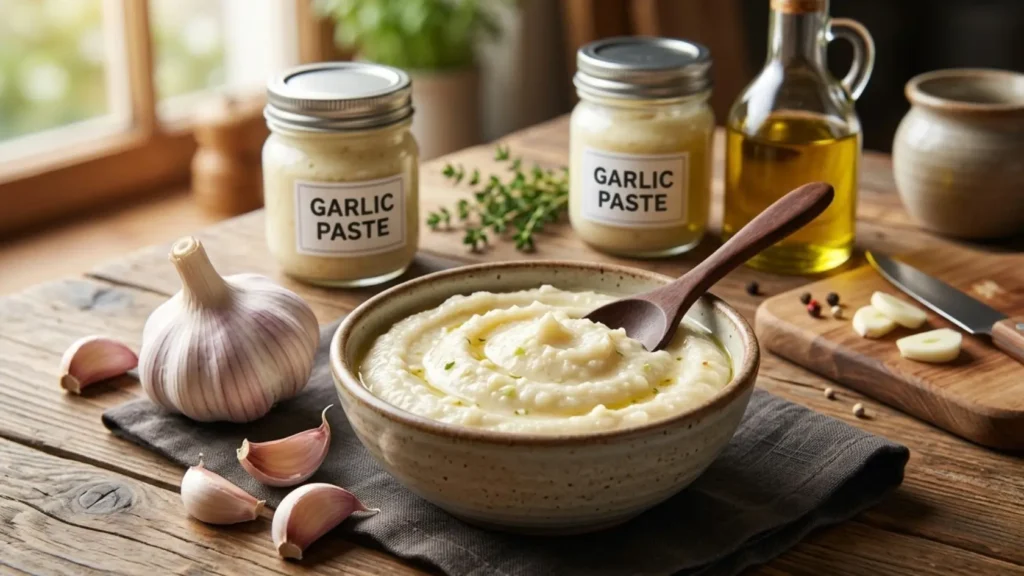
Garlic paste is one of the most widely used convenience ingredients in modern kitchens and food manufacturing – yet most buyers never ask what actually goes into a jar before they use it. This guide answers every major question people ask about garlic paste: what it is, how it’s made, its nutritional and culinary benefits, how it compares to fresh garlic and garlic powder, and how to choose a reliable bulk supplier.
Garlic paste is a smooth, ready-to-use ingredient made by grinding fresh, peeled garlic cloves into a fine consistency, often with a small amount of oil, water, or preservative to maintain freshness and texture. It delivers the same pungent aroma and flavor as fresh garlic without the labor of peeling and mincing, making it a staple in curries, marinades, sauces, soups, and packaged food production.
What Is Garlic Paste?
Garlic paste is a processed food ingredient made by finely grinding peeled garlic cloves into a smooth, spreadable consistency. It is prized for delivering consistent flavor, aroma, and pungency without the prep time fresh garlic requires – no peeling, no mincing, no lingering smell on your hands.
At an industrial level, garlic paste is manufactured under controlled hygiene conditions to ensure a stable shelf life, uniform texture, and food-safety compliance, which is why it’s a preferred ingredient for both home kitchens and commercial food producers such as sauce makers, seasoning blenders, and ready-meal manufacturers.
How Is Garlic Paste Made?
Commercial garlic paste production typically follows these steps:
- Sourcing – Fresh, mature garlic bulbs are selected for pungency and low moisture defects.
- Cleaning & Peeling – Cloves are separated, washed, and mechanically or manually peeled.
- Grinding – Peeled cloves are ground into a fine, smooth paste using industrial grinders.
- Stabilizing – A small amount of water, oil, salt, or citric acid may be added to control texture, color, and shelf life.
- Hygienic Packing – The paste is packed in air-tight, food-grade containers to lock in freshness and prevent oxidation.
This process is what separates high-quality, food-safety-certified garlic paste from inconsistent, small-batch alternatives.
Garlic Paste vs Fresh Garlic vs Garlic Powder
| Factor | Garlic Paste | Fresh Garlic | Garlic Powder |
| Prep time | None (ready to use) | High (peel + mince) | None |
| Flavor intensity | Strong, close to fresh | Strongest | Milder, more concentrated dry flavor |
| Shelf life | Weeks to months (refrigerated) | 1-2 weeks | 6-12 months |
| Best for | Curries, marinades, sauces, bulk manufacturing | Fresh cooking, garnish | Dry rubs, spice blends |
| Consistency | Smooth, uniform | Variable | Fine powder |
| Industrial scalability | High | Low | High |
Garlic paste offers the closest flavor match to fresh garlic while eliminating prep time, whereas garlic powder trades some pungency for a longer shelf life and dry-blend convenience.
Nutritional Profile of Garlic Paste
Garlic paste retains most of the nutritional compounds found in fresh garlic, including:
- Allicin – the sulfur compound responsible for garlic’s characteristic aroma and much of its functional benefit
- Manganese and Vitamin B6 – support metabolism and nervous system function
- Vitamin C – contributes antioxidant activity
- Low calorie density – garlic paste is used in small quantities per serving, keeping calorie contribution minimal
Note: Nutritional values vary by formulation (pure paste vs. paste with added oil/salt). Always check the supplier’s product specification sheet for exact values.
Health Benefits of Garlic Paste
Garlic has been studied extensively for its functional properties, and garlic paste carries forward many of these because it’s made from whole, minimally processed cloves:
- Supports cardiovascular health – garlic compounds are commonly associated with healthy blood pressure and cholesterol balance
- Antioxidant activity – sulfur compounds help combat oxidative stress
- Immune support – garlic is traditionally used to support the body’s natural defenses
- Digestive aid – commonly used to stimulate digestive enzymes in traditional cooking practices
- Antimicrobial properties – allicin has documented antibacterial characteristics in food science research
This content is for general educational purposes and is not medical advice. Consult a healthcare professional for personalized guidance.
Culinary Uses of Garlic Paste
Garlic paste is a workhorse ingredient across cuisines and food categories:
- Curries and gravies – the base aromatic for South Asian, Middle Eastern, and Southeast Asian cooking
- Marinades – tenderizes and flavors meat, poultry, and seafood
- Sauces and dressings – blends smoothly into pastes, dips, and dressings without lumps
- Soups and broths – dissolves evenly for consistent flavor distribution
- Snack seasoning and coatings – used in fried and packaged snack production
- Ready-to-eat and packaged foods – a standard ingredient in industrial food manufacturing for consistent batch-to-batch flavor
How to Store Garlic Paste
- Keep refrigerated after opening (typically 2-8°C)
- Use a clean, dry spoon each time to prevent contamination
- Keep the container tightly sealed to slow oxidation and color change
- For bulk/industrial use, store in a cool, dry facility away from direct sunlight and follow the supplier’s recommended shelf-life window
Buying Garlic Paste in Bulk: What to Look For
If you’re sourcing garlic paste for a restaurant, food brand, or manufacturing line, evaluate suppliers on:
- Consistency – uniform texture and color across every batch
- Hygiene certifications – food safety standards (e.g., HACCP, ISO, Halal) relevant to your market
- Aroma and pungency strength – should reflect fresh, high-quality garlic, not diluted or aged stock
- Packaging options – scalable formats for both small-batch and industrial-volume orders
- Supply reliability – consistent lead times and traceable sourcing
- Customization – ability to adjust texture, salt content, or packaging to your product specifications
Why Food Brands Choose BioMasdar Garlic Paste
BioMasdar supplies ready-to-use garlic paste made from fresh, high-quality garlic cloves, ground to a smooth, finely textured consistency with a strong, authentic aroma. It’s hygienically processed and packed to retain freshness, making it suitable for both home cooks and professional food manufacturers who need dependable, consistent flavor at scale.
As a Pakistan-based supplier of natural ingredients for the food, pharma, nutraceutical, and cosmetic industries, BioMasdar works with businesses that need reliable bulk supply – from curry houses and sauce producers to seasoning blenders and snack manufacturers – backed by hygienic processing standards and export-ready packaging.
Your Questions, Answered
Q1. What is garlic paste made of?
Garlic paste is made from fresh, peeled garlic cloves ground into a smooth consistency, sometimes with small amounts of water, oil, or a preservative added to maintain texture and shelf life.
Q2. Is garlic paste as healthy as fresh garlic?
Garlic paste retains most of the beneficial sulfur compounds and nutrients found in fresh garlic, since it’s made from whole cloves with minimal processing, though exact nutrient levels can vary slightly by formulation.
Q3. How long does garlic paste last?
Refrigerated garlic paste typically lasts several weeks to a few months unopened, and should be used within a few weeks once opened, depending on the preservatives used and storage conditions.
Q4. Can garlic paste replace fresh garlic in recipes?
Yes, garlic paste can generally replace fresh garlic in most recipes; a common conversion is about 1 teaspoon of garlic paste for one medium clove of fresh garlic, adjusted to taste.
Q5. Is garlic paste used in commercial food manufacturing?
Yes, garlic paste is widely used in commercial food manufacturing for sauces, seasonings, marinades, and ready-to-eat meals because it delivers consistent flavor and blends smoothly at scale.
Q6. What is the difference between garlic paste and garlic puree?
Garlic paste and garlic puree are often used interchangeably, though “paste” sometimes refers to a thicker, more concentrated grind while “puree” can be slightly smoother or more liquid, depending on the manufacturer.
Q7. Where can I buy bulk garlic paste for my food business?
Bulk garlic paste is available from specialized ingredient suppliers such as BioMasdar, which supplies hygienically processed, ready-to-use garlic paste for food, sauce, and seasoning applications.
To Sum It Up
Garlic paste has earned its place as a kitchen and manufacturing essential because it delivers the flavor of fresh garlic with none of the prep hassle, plus the consistency that both home cooks and food producers depend on. Whether you’re stocking your kitchen or sourcing an ingredient for large-scale production, understanding how garlic paste is made, stored, and evaluated helps you choose a product that’s fresh, safe, and reliable.
Looking for a dependable bulk garlic paste supplier? BioMasdar delivers fresh, hygienically processed, export-ready garlic paste for food, sauce, and seasoning applications. Visit the BioMasdar garlic paste product page or contact BioMasdar to request samples and bulk pricing.