
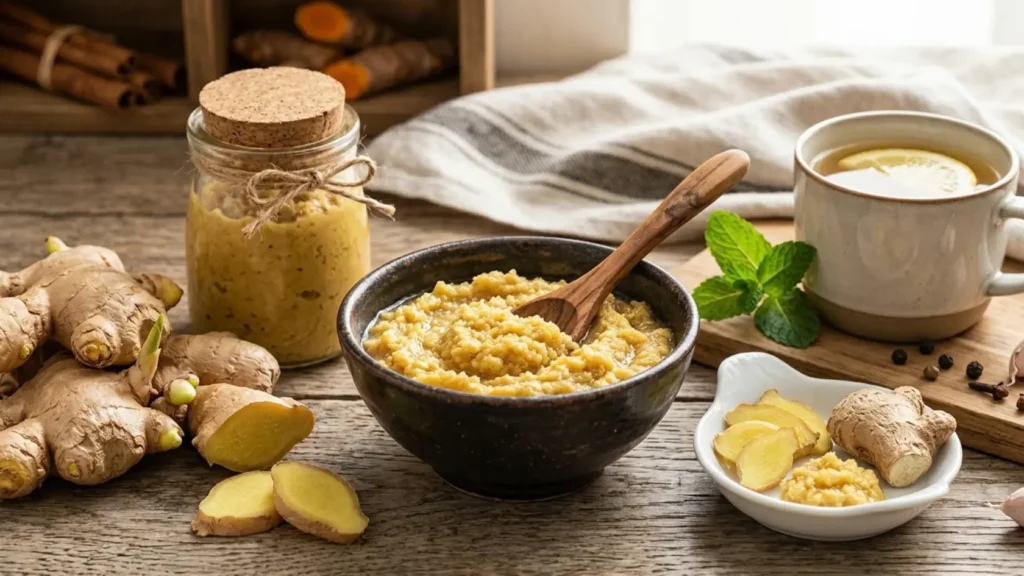
Ginger paste is a smooth, ready-to-use blend made by grinding fresh ginger rhizome into a spreadable consistency, often with a small amount of oil or water to maintain texture and shelf life. It has become a kitchen and food-manufacturing staple because it delivers the pungent, aromatic flavor of fresh ginger without the time-consuming steps of peeling, washing, and grinding.
This guide covers everything you need to know about ginger paste – what it is, how it’s made, its nutritional and health benefits, how to use it in cooking, how to store it, and how to source it in bulk for commercial or food-processing use, including options available from BioMasdar, a Karachi-based supplier of natural ingredients for the food, pharma, nutraceutical, and cosmetic industries.
What Is Ginger Paste?
Ginger paste is a processed food product made from the rhizome of the ginger plant (Zingiber officinale), washed, peeled, and blended into a smooth or slightly coarse consistency. Commercial ginger paste typically includes a stabilizing element – water, oil, or a small amount of acid such as citric acid – to extend shelf life and prevent oxidation, which can darken the paste and dull its flavor.
Unlike ginger powder (dehydrated and ground) or ginger juice (extracted liquid only), ginger paste retains the whole fibrous body of the rhizome, giving it a fuller, fresher flavor profile closer to raw ginger. It is classified in the food industry under pastes and spreads, alongside garlic paste, ginger-garlic paste, and chili paste – all staples for commercial kitchens, restaurants, and packaged food manufacturers.
Key entity facts:
- Botanical source: Ginger rhizome (Zingiber officinale)
- Category: Culinary paste / spice paste
- Primary compounds: Gingerol, shogaol, zingerone
- Common form factors: Jars, pouches, bulk drums (5 kg-200 kg) for industrial use
- Shelf-stable range: Typically 6-12 months when properly processed and refrigerated/frozen
How Is Ginger Paste Made?
Producing food-safe ginger paste at commercial scale generally follows these steps:
- Sourcing and grading – Fresh ginger rhizomes are selected for maturity, low fiber content, and absence of mold or decay.
- Washing and peeling – Rhizomes are washed to remove soil and peeled to remove the outer skin, which can carry bitterness and contaminants.
- Blending/grinding – Peeled ginger is ground into a paste using industrial grinders, often with controlled moisture content.
- Stabilization – A small percentage of edible oil, salt, or citric acid may be added to control microbial growth and oxidation.
- Pasteurization or hygienic processing – Heat treatment or hygienic cold-processing reduces microbial load while preserving flavor compounds.
- Packaging – The paste is filled into airtight containers under hygienic conditions to protect freshness during storage and transport.
This process is why not all ginger paste is equal – the quality of raw ginger, the hygiene standard of processing, and the absence of unnecessary fillers all directly affect flavor, color, and shelf life.
Ginger Paste vs. Fresh Ginger vs. Ginger Powder
| Attribute | Fresh Ginger | Ginger Paste | Ginger Powder |
| Prep time | High (peel, grate) | None (ready-to-use) | None (ready-to-use) |
| Flavor intensity | Strong, sharp | Strong, close to fresh | Milder, warmer, drier |
| Shelf life | 3-4 weeks (refrigerated) | 6-12 months (processed) | 12-24 months |
| Best for | Fresh garnishes, teas | Curries, marinades, sauces | Baking, dry spice blends |
| Consistency | Solid rhizome | Smooth/semi-smooth paste | Fine dry powder |
| Bulk food manufacturing use | Limited (perishable) | High (stable, easy dosing) | High (long shelf life) |
Bottom line: Fresh ginger offers the sharpest flavor but is labor-intensive and perishable. Ginger paste offers the best balance of authentic flavor and convenience, making it the preferred choice for both home cooks and food manufacturers who need consistency at scale. Ginger powder is ideal only where a dry, shelf-stable format is required.
Nutritional Profile of Ginger Paste
Per 100 g of standard ginger paste (values are approximate and vary by brand and formulation):
- Calories: ~60-80 kcal
- Carbohydrates: ~13-17 g
- Dietary fiber: ~1.5-2 g
- Protein: ~1.5-2 g
- Fat: ~0.5-1 g (higher if oil-stabilized)
- Key bioactive compounds: Gingerol, shogaol, zingerone, essential oils (zingiberene)
- Micronutrients: Small amounts of potassium, magnesium, vitamin B6, and vitamin C
The gingerol and shogaol content are what give ginger its characteristic pungency and are also the compounds most studied for potential health effects.
Health Benefits of Ginger Paste
Ginger has a long history in traditional medicine systems (including Ayurveda and Traditional Chinese Medicine) and has been studied for several potential health-supporting properties. Ginger paste, when made from quality fresh ginger, retains most of these bioactive compounds.
- Digestive support: Ginger is commonly used to ease occasional nausea, bloating, and indigestion.
- Anti-inflammatory properties: Gingerol has documented anti-inflammatory activity in scientific literature, which is why ginger is often included in diets targeting joint or muscle discomfort.
- Antioxidant content: Ginger contains antioxidant compounds that help neutralize free radicals.
- Nausea relief: Ginger is widely recognized for reducing nausea, including motion sickness and morning sickness (consult a doctor before use during pregnancy).
- Immune support: Ginger’s antimicrobial and warming properties make it a common addition to teas and remedies during cold and flu season.
- Metabolic support: Some studies suggest ginger may support healthy blood sugar and cholesterol levels as part of a balanced diet.
Disclaimer: Ginger paste is a food ingredient, not a medicine. These points reflect general, widely cited properties of ginger and are not a substitute for professional medical advice. Anyone with a specific health condition, on medication (especially blood thinners), or pregnant should consult a healthcare provider before increasing ginger intake.
Culinary Uses of Ginger Paste
Ginger paste is prized for how easily it blends into a dish without the texture of grated fibers. Common uses include:
- Curries and gravies – A base aromatic alongside garlic paste and onions in South Asian, Southeast Asian, and Middle Eastern cooking.
- Marinades – Tenderizes meat while adding flavor; commonly paired with garlic paste, yogurt, or soy sauce.
- Soups and broths – Adds warmth and depth to both clear and creamy soups.
- Stir-fries – A quick flavor base for vegetables, noodles, and proteins.
- Sauces and dips – Used in ginger-soy, sweet chili, and dipping sauce formulations.
- Baked goods and beverages – Used in gingerbread, ginger tea, ginger ale concentrates, and health shots.
- Ready-to-eat and packaged foods – A common ingredient in commercial curry pastes, instant noodle seasoning, and snack coatings.
Practical tip: 1 teaspoon of ginger paste is roughly equivalent to 1 inch of fresh grated ginger, making it easy to substitute in most recipes at a 1:1 ratio.
How to Store Ginger Paste & Shelf Life
- Refrigeration: Once opened, store in an airtight container in the refrigerator and use within 2-4 weeks for best flavor.
- Freezing: Ginger paste freezes well in ice-cube trays or small portions, extending usability to several months without significant flavor loss.
- Unopened, commercially processed paste: Typically shelf-stable for 6-12 months when stored in a cool, dry place away from direct sunlight, depending on the manufacturer’s processing method and packaging.
- Signs of spoilage: Off odor, visible mold, significant color darkening, or separation with an unusual smell indicate the paste should be discarded.
- Best practice for food manufacturers: Always use clean, dry utensils when scooping paste from bulk containers to avoid introducing contamination that shortens shelf life.
Ginger Paste for Food Manufacturing & Bulk Buyers
For restaurants, packaged food brands, and food processing companies, ginger paste offers major operational advantages over fresh ginger:
- Consistency: Uniform flavor intensity and color across every batch, which is critical for maintaining product quality at scale.
- Reduced labor cost: Eliminates peeling and grinding labor in commercial kitchens or production lines.
- Extended shelf life: Reduces spoilage-related waste compared to fresh ginger stock.
- Easier dosing: Standardized consistency allows for precise formulation in recipes, sauces, and seasoning blends.
- Bulk packaging options: Suppliers like BioMasdar offer ginger paste in bulk formats suited for food processing, HORECA (hotel/restaurant/catering), and export requirements.
Businesses sourcing ginger paste at scale should request documentation on moisture content, microbial testing, shelf-life data, and Halal/food safety certification to ensure the product meets regulatory and quality standards for their target market.
How to Choose a Quality Ginger Paste Supplier
When evaluating a ginger paste supplier for bulk or B2B purchase, consider:
- Sourcing transparency – Does the supplier disclose where and how the ginger is grown and processed?
- Hygiene and certification – Look for Halal certification, food safety compliance, and hygienic processing standards.
- Consistency of supply – Can the supplier maintain consistent quality and volume year-round?
- Customization – Can the supplier adjust formulation (e.g., with or without added oil, salt, or preservatives) to match your product needs?
- Industry experience – Suppliers serving food, pharma, nutraceutical, and cosmetic industries typically maintain higher processing and quality-control standards.
BioMasdar produces ginger paste as part of its Pastes & Spreads category, positioned for cooking, sauces, and food-processing applications. The company describes its ginger paste as a fresh, ready-to-use product made from high-quality ginger, processed to retain natural aroma, pungent flavor, and nutritional value, and hygienically prepared and packaged to maintain freshness for both home cooks and professional/industrial use. Buyers looking for bulk supply can view current specifications and request a quote directly on the BioMasdar ginger paste product page.
Let’s Clear Things Up
Q1. What is ginger paste made of?
Ginger paste is made primarily from fresh, peeled ginger rhizome blended to a smooth consistency, often with a small amount of water, oil, or citric acid added to preserve freshness and control texture.
Q2. Is ginger paste the same as fresh ginger?
Ginger paste is made from fresh ginger but is pre-processed for convenience. It offers a flavor very close to fresh ginger while eliminating the need to peel and grate it before each use.
Q3. How much ginger paste equals fresh ginger?
As a general rule, 1 teaspoon of ginger paste is equivalent to about 1 inch of fresh, peeled ginger, allowing a simple 1:1 substitution in most recipes.
Q4. How long does ginger paste last once opened?
Opened ginger paste typically lasts 2-4 weeks when stored in an airtight container in the refrigerator, and several months if frozen in small portions.
Q5. Can ginger paste go bad?
Yes. Signs of spoilage include an off smell, visible mold, significant discoloration, or an unusual texture change. Discard the paste if any of these signs appear.
Q6. Is ginger paste healthy?
Ginger paste retains many of the bioactive compounds found in fresh ginger, including gingerol and shogaol, which are associated with anti-inflammatory and antioxidant properties. It should be used as part of a balanced diet, not as a medical treatment.
Q7. What is the difference between ginger paste and ginger powder?
Ginger paste is made from fresh ginger and has a stronger, fresher flavor with a shorter shelf life. Ginger powder is dehydrated and ground, offering a milder, drier flavor with a much longer shelf life, and is typically used in baking and dry spice blends.
Q8. Where can I buy ginger paste in bulk for commercial use?
Food businesses, restaurants, and manufacturers can source bulk ginger paste from specialized ingredient suppliers such as BioMasdar, which supplies ginger paste for cooking, sauces, and food-processing applications with a focus on fresh flavor and consistent quality.
Q9. Does ginger paste need to be refrigerated?
Most commercial ginger paste should be refrigerated after opening to maintain freshness and slow oxidation. Unopened, properly processed paste may be shelf-stable until opened – always check the specific product’s packaging instructions.
In a Nutshell
Ginger paste bridges the gap between the authentic flavor of fresh ginger and the convenience modern kitchens and food manufacturers need. Whether you’re a home cook looking to save prep time or a food business sourcing a consistent, high-quality ingredient at scale, understanding how ginger paste is made, stored, and used helps you get the most value and flavor out of every batch.
For businesses that need reliable, hygienically processed ginger paste in bulk – for cooking applications, sauces, or food processing – BioMasdar offers ginger paste built for consistent quality and fresh flavor, backed by experience supplying natural ingredients across the food, pharma, nutraceutical, and cosmetic industries.
Ready to source premium ginger paste in bulk?
Get a Quote for BioMasdar ginger paste Or contact the BioMasdar team directly to discuss bulk pricing, specifications, and supply for your business.