
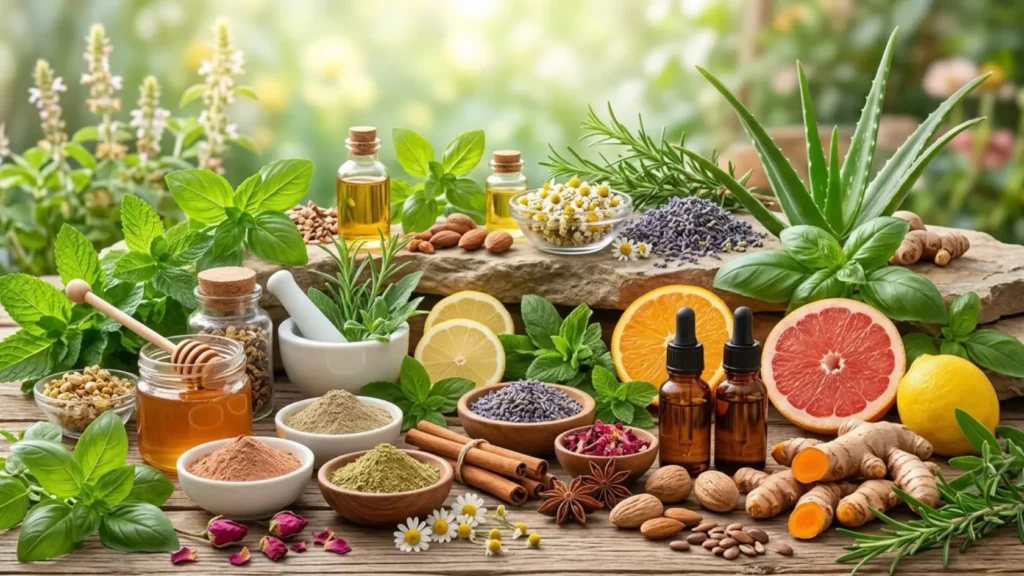
Natural ingredients are substances derived directly from plants, animals, minerals, or other natural sources through minimal or non-synthetic processing, and are used in food, cosmetics, pharmaceuticals, and industrial applications without artificial chemical alteration. Common categories include essential oils, oleoresins, cold pressed oils, dehydrated spices, and natural pastes – all sourced and processed to retain their original nutritional, aromatic, and functional properties.
Companies like BioMasdar specialize in manufacturing and supplying such natural ingredient solutions to food, beverage, nutraceutical, and cosmetic industries worldwide.
What Are Natural Ingredients?
Natural ingredients are raw or minimally processed materials sourced from plants, fruits, vegetables, seeds, herbs, and spices, used without synthetic additives, artificial preservatives, or chemically engineered compounds. They retain the inherent nutritional value, flavor, aroma, and bioactive compounds of their original source.
Unlike artificial ingredients – which are manufactured through chemical synthesis – natural ingredients are extracted using physical or low-impact methods such as pressing, drying, distillation, or fermentation.
Key characteristics of natural ingredients:
- Derived from plant, animal, or mineral sources
- Minimally processed to preserve nutritional integrity
- Free from synthetic additives and artificial preservatives
- Biodegradable and generally more sustainable
- Rich in naturally occurring vitamins, antioxidants, and essential compounds
Why Natural Ingredients Matter
Consumer demand for clean-label, transparent, and sustainably sourced products has made natural ingredients a priority across the food, beverage, and personal care industries. Here’s why they matter:
- Health & wellness: Free from artificial chemicals, natural ingredients often carry higher nutritional and antioxidant value.
- Clean-label appeal: Consumers increasingly check labels and prefer recognizable, natural components.
- Sustainability: Natural sourcing and extraction methods generally have a lower environmental footprint than synthetic chemical manufacturing.
- Regulatory compliance: Many markets (EU, US, GCC) are tightening restrictions on artificial additives, pushing manufacturers toward natural alternatives.
- Authentic flavor & aroma: Natural extracts and oils deliver more nuanced, true-to-source taste and fragrance profiles than synthetic substitutes.
Main Types of Natural Ingredients
Natural ingredients span a wide range of categories, each suited to different applications. Below is a breakdown of the major types manufactured and supplied by companies like BioMasdar.
1. Oleoresins
Oleoresins are concentrated natural extracts obtained from spices and herbs, containing both the volatile essential oil and the non-volatile resin of the source material. They deliver intense flavor, color, and aroma and are widely used in food seasoning, pharmaceuticals, and flavoring applications where a concentrated, standardized extract is required.
2. Essential Oils
Essential oils are highly concentrated aromatic compounds extracted from plants via steam distillation or cold pressing. They are used extensively in food flavoring, aromatherapy, cosmetics, and pharmaceutical formulations for their fragrance and functional bioactive properties.
3. Fried Products
Naturally fried ingredients – such as fried onions, garlic, and vegetables – are processed using controlled frying techniques to preserve natural taste while extending shelf life. These are widely used as toppings, snack ingredients, and flavor enhancers in packaged foods.
4. Cold Pressed Oils
Cold pressed oils are extracted mechanically at low temperatures without heat or chemical solvents, preserving natural nutrients, flavor, and aroma. They’re preferred in premium food, culinary, and cosmetic applications for their unrefined, nutrient-dense quality.
5. Pastes & Spreads
Natural pastes and spreads (such as garlic paste, ginger paste, and fruit spreads) are made by grinding or blending raw natural ingredients into ready-to-use culinary formats, offering convenience without compromising on authentic taste.
6. Dehydrated Fruits, Vegetables & Spices
Dehydration removes moisture from fruits, vegetables, and spices while retaining nutrients, flavor, and color – extending shelf life without artificial preservatives. These are used in snacks, instant foods, seasoning blends, and bakery applications.
7. Seasonings
Natural seasoning blends combine dried herbs, spices, and extracts to create flavor profiles for the food industry, free from artificial flavor enhancers like MSG when formulated as “natural” seasonings.
8. Frozen Yoghurt Powders / Soft Serve Premix Powders
These are natural dairy-based powder formulations used by the frozen dessert and soft-serve industry to create yoghurt-based frozen treats with authentic taste and texture, without relying on synthetic flavoring systems.
Natural vs. Synthetic Ingredients
| Factor | Natural Ingredients | Synthetic Ingredients |
| Source | Plants, animals, minerals | Chemically manufactured |
| Processing | Minimal (pressing, drying, distilling) | Chemical synthesis |
| Label perception | Clean-label, consumer-preferred | Often flagged by clean-label shoppers |
| Consistency | Can vary by harvest/season | Highly consistent |
| Cost | Generally higher | Generally lower |
| Sustainability | Often more sustainable | Depends on manufacturing process |
How Natural Ingredients Are Processed
Natural ingredient manufacturing typically follows these stages:
- Sourcing – Raw materials (herbs, spices, fruits, vegetables, seeds) are sourced from farms or growers, often with traceability protocols.
- Cleaning & sorting – Materials are cleaned and graded for quality.
- Extraction or processing – Methods such as cold pressing, steam distillation, dehydration, or grinding are applied depending on the desired end product (oil, paste, powder, oleoresin, etc.).
- Quality testing – Products are tested for purity, potency, and safety compliance.
- Packaging & distribution – Finished ingredients are packaged to preserve freshness and shipped to food, cosmetic, or pharmaceutical manufacturers.
Suppliers such as BioMasdar manage this entire pipeline – from raw material sourcing to finished natural ingredient production – to ensure consistent quality across categories like essential oils, cold pressed oils, oleoresins, and dehydrated spices.
Industries That Use Natural Ingredients
- Food & beverage manufacturing – seasonings, pastes, dehydrated spices, flavoring oleoresins
- Nutraceuticals & supplements – essential oils, plant extracts
- Cosmetics & personal care – cold pressed oils, essential oils
- Frozen desserts & dairy – soft serve premix powders, frozen yoghurt powders
- Snack food production – fried products, dehydrated fruits and vegetables
- Pharmaceutical formulation – oleoresins, essential oils
How to Choose a Natural Ingredients Supplier
When selecting a natural ingredients partner for food, cosmetic, or nutraceutical manufacturing, consider:
- Product range breadth – Does the supplier offer multiple categories (oils, oleoresins, pastes, powders) to simplify sourcing?
- Quality certifications – Look for food safety and quality certifications relevant to your market.
- Traceability & sourcing transparency – Can the supplier document where and how raw materials are sourced?
- Customization capability – Can they tailor formulations (e.g., seasoning blends, premix powders) to your product specs?
- Consistency & supply reliability – Natural ingredients can vary seasonally; a strong supplier manages this variability without compromising quality.
BioMasdar offers a comprehensive natural ingredients portfolio spanning oleoresins, essential oils, cold pressed oils, fried products, pastes & spreads, dehydrated fruits/vegetables/spices, seasonings, and frozen yoghurt/soft serve premix powders – making it a one-stop natural ingredients partner for food and beverage manufacturers.
Questions You Might Have
Q1. What are natural ingredients?
Natural ingredients are substances derived from plants, animals, or minerals through minimal processing methods like pressing, drying, or distillation, without synthetic chemical additives.
Q2. What is the difference between natural and organic ingredients?
Natural ingredients are minimally processed and free from synthetic additives, while “organic” is a certified classification indicating the raw material was grown without synthetic pesticides or fertilizers. An ingredient can be natural without being certified organic.
Q3. Are essential oils considered natural ingredients?
Yes. Essential oils are extracted from plants through steam distillation or cold pressing and are classified as natural ingredients due to their minimal processing and plant-based origin.
Q4. What industries rely most on natural ingredients?
Food and beverage manufacturing, cosmetics, nutraceuticals, frozen desserts, and pharmaceutical formulation are the largest users of natural ingredients.
Q5. Why are dehydrated fruits and vegetables considered natural?
Dehydration only removes moisture through heat or air-drying – no synthetic chemicals or preservatives are added – so the fruit or vegetable retains its natural composition, just in a shelf-stable form.
Q6. What are oleoresins used for?
Oleoresins are concentrated spice and herb extracts used to add standardized flavor, color, and aroma in food processing, seasoning blends, and pharmaceutical products.
Q7. How do I choose a reliable natural ingredients supplier?
Look for breadth of product range, quality certifications, sourcing transparency, customization capability, and consistent supply – companies like BioMasdar offer all of these across multiple natural ingredient categories.
Wrapping Things Up
Natural ingredients form the backbone of clean-label food, beverage, cosmetic, and nutraceutical products. From concentrated oleoresins and aromatic essential oils to cold pressed oils, dehydrated spices, and frozen yoghurt premix powders, each category serves a distinct role in delivering authentic taste, aroma, and nutritional value without synthetic additives. As consumer demand for transparency and sustainability grows, manufacturers are increasingly turning to trusted natural ingredient suppliers to future-proof their product lines.
BioMasdar provides a full spectrum of natural ingredient solutions – including oleoresins, essential oils, cold pressed oils, fried products, pastes & spreads, dehydrated fruits, vegetables & spices, seasonings, and frozen yoghurt/soft serve premix powders – helping food and beverage businesses source high-quality, natural ingredients from a single, reliable partner.
Ready to Source Premium Natural Ingredients?
Explore BioMasdar’s full range of natural ingredient solutions and find the right products for your food, beverage, or nutraceutical formulations. Contact BioMasdar today to request samples, technical data sheets, or a custom quote.